Golf isn’t always about birdies, leaderboards, or trophy lifts. Sometimes, it’s about the quiet moments between brothers on the 18th green—when a caddie removes his hat, wipes his brow, and shares a look that speaks louder than any headline. That’s exactly what happened when Alex Fitzpatrick, long overshadowed by his more decorated brother Matt, secured his long-sought place on the PGA Tour, powered by an emotional, hard-fought victory backed by Matt’s unwavering presence.
This wasn’t just a personal triumph. It was a family win—one forged in years of shared practice sessions, honest feedback, and the kind of brotherly rivalry that either breaks people or makes them stronger. Alex’s breakthrough season, culminating in a dramatic finish on the Korn Ferry Tour, wasn’t a fluke. It was the payoff of relentless work—and the invisible edge that comes from having a world-class golfer in your corner.
The Weight of a Last Name: Playing in a Champion’s Shadow For years, Alex Fitzpatrick carried more than just his clubs—he carried expectations. Matt, the 2022 U.S. Open champion and a consistent top-10 presence in global rankings, set a bar few could match. When Alex first stepped into competitive golf, media coverage leaned heavily on the comparison. “Matt’s brother” became a label that clung tighter than a wind-affected lie.
But labels don’t win tournaments. Resilience does.
Alex didn’t take the flashy route. While Matt rose quickly through elite junior circuits and into professional spotlight, Alex charted a quieter course. He played collegiate golf at the University of Tennessee, where he earned All-American honors—not by outshining everyone, but by consistently delivering under pressure. His swing wasn’t the most flamboyant, nor his stats the flashiest. But his work ethic? Impeccable.
What many overlooked was that Alex wasn’t trying to replace Matt—he was trying to earn his own place. And that meant building a game built on precision, patience, and mental toughness.
The Turning Point: A Season of Redemption
The 2023 Korn Ferry Tour season was Alex’s most complete to date. He didn’t dominate from the start. In fact, early tournaments were marked by missed cuts and inconsistent putting—a familiar frustration for any golfer on the fringe of the big leagues. But something shifted around midseason.
At the KC Golf Classic, Alex fired a third-round 64 to leap into contention. He didn’t win, but he finished T5—a sign of momentum. Then came the Huntsville Championship, where, trailing by three strokes at the start of the final round, he birdied holes 14, 15, and 17 to force a playoff. He lost in sudden death, but the performance lit a fire.
And then, at the nearly rain-soaked United Leasing & Finance Championship, everything clicked.
The Emotional Victory: Brothers, Pressure, and a Final Putt
The final round was a test of nerves. Alex entered Sunday two shots back. The course was soft, the greens slick, and the wind unpredictable. On the 12th tee, he stood at even par for the tournament—same as two others. Then, disaster: a wayward drive into thick rough led to a bogey. Momentum faltered.
That’s when Matt’s caddie calm took over.
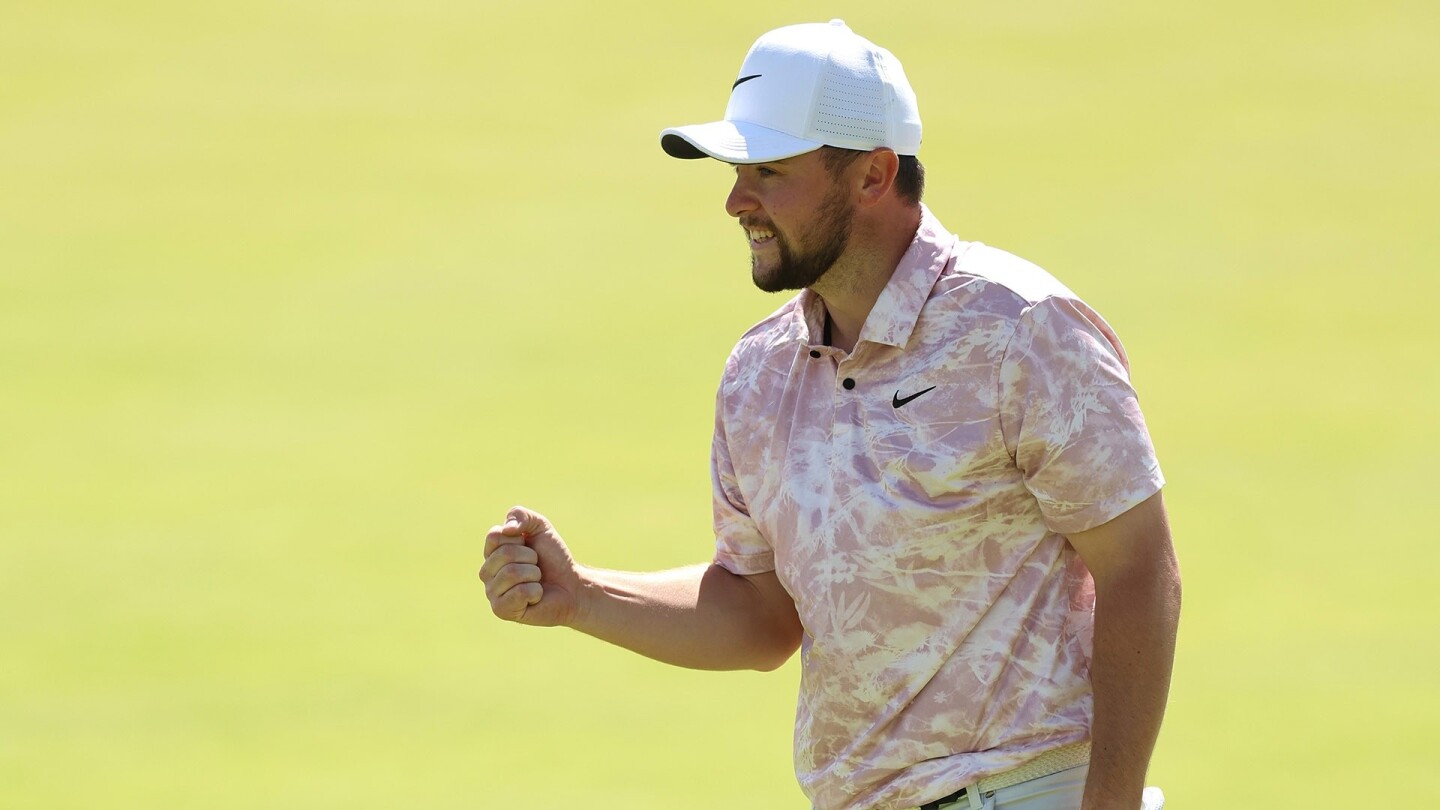
As Alex stood over a tricky chip on 15, Matt—wearing the caddie bib—leaned in with two words: “Trust it.” Alex nodded, swung, and watched the ball roll within a foot of the hole. He saved par. On 16, he drained a 20-footer for birdie. On 17, a perfect iron to 12 feet, another birdie.
Walking to the 18th tee, Alex led by one.
The final approach was textbook—7-iron, high draw, landing softly on the green, stopping 18 feet from the pin. The putt for victory was downhill, with a subtle left-to-right break. The crowd hushed.
Matt stood off to the side, stone-faced. But those who knew him saw the tension in his shoulders.
Alex stroked the putt. It tracked perfectly. The ball dropped. The crowd erupted.
And in that moment, the brothers embraced—not as pro and caddie, but as equals. One had just earned his PGA Tour card. The other had helped him cross the finish line.
Why This Win Matters Beyond the Scorecard
Alex’s victory wasn’t just about securing playing rights. It was symbolic. In a sport where legacy and lineage often dictate opportunity, Alex proved that grit and support can break through even the heaviest expectations.
It also highlighted the evolving role of family in modern golf. While most caddies are hired professionals, Matt’s decision to loop for Alex wasn’t publicity stunt—it was personal. He turned down media appearances and practice time to be there. He studied Alex’s swing patterns, course management habits, and stress triggers. He wasn’t just carrying clubs; he was managing emotions.
Golf psychologists often speak of “familiar anchors”—people who help athletes regulate under pressure. For Alex, that anchor was Matt. Their shared history, inside knowledge of each other’s tendencies, and deep mutual respect created a competitive advantage no data model can quantify.
The Road Ahead: What Alex’s PGA Tour Card Changes
Earning a PGA Tour card via the Korn Ferry Tour Finals is a major milestone—but it’s not a guarantee of sustained success. History shows that about 40% of newly promoted players miss full exemption the following year due to inconsistent performance, injury, or mental fatigue.
Alex’s challenge now is threefold:
- Adapting to Stronger Fields – The average skill level on the PGA Tour exceeds that of the Korn Ferry Tour by a measurable margin. Off-week players are still world-class. Alex will need to elevate his prep and recovery routines.
- Scheduling Smart – With limited sponsor exemptions and FedEx Cup points on the line, picking the right tournaments is crucial. Courses that reward accuracy over distance—like Harbour Town or John Deere—may give him early momentum.
- Managing Expectations—Again – The narrative may shift from “Matt’s brother” to “the next British star,” but pressure always finds a way in. How Alex handles media, travel, and off-course demands will define his longevity.
But he’s not starting from scratch. He has a caddie who understands his game better than anyone. He has a brother who’s walked this path. And he has proof—tangible, emotional proof—that he belongs.
The Bigger Picture: Brotherhood as a Competitive Edge
There’s a growing body of evidence that familial support improves athletic performance—not just emotionally, but tactically. A 2022 Journal of Sports Psychology study showed that athletes with family members in their coaching or support roles reported higher confidence levels and lower pre-competition anxiety—especially when the family member had elite-level experience.

The Fitzpatricks embody this. Their relationship isn’t transactional. It’s grounded in years of shared experience: backyard chipping contests, late-night swing analyses, honest critiques after bad rounds. Matt doesn’t sugarcoat. Alex doesn’t resent it. That dynamic creates a feedback loop of growth.
Other golfers have leaned on family—Tiger Woods with his father Earl, Lexi Thompson with her brother Nicholas—but few have done so in such a direct, visible way at this level.
And in Alex’s case, it wasn’t about Tiger-esque dominance. It was about persistence. It was about showing up when no one was watching, grinding through doubt, and finally being rewarded—not with a major, but with something more personal: validation.
What This Means for Golf Fans and Aspiring Players
This story resonates beyond the stats because it’s human. It’s not about overnight success. It’s about what happens when talent meets tenacity—and when one brother’s success doesn’t eclipse another’s journey, but fuels it.
For young golfers struggling in the shadow of more accomplished peers, Alex’s path offers a blueprint:
- Focus on incremental improvement, not instant fame.
- Seek mentorship from those who know you best—family, coaches, teammates.
- Embrace pressure as part of the process, not a barrier.
- Let setbacks refine you, not define you.
And for fans? It’s a reminder that the most powerful moments in sports aren’t always the loudest. Sometimes, they’re the quiet hugs on the 18th green between two brothers who’ve fought for this moment together.
Alex Fitzpatrick’s PGA Tour card isn’t just a career milestone. It’s a testament to what happens when support, skill, and brotherhood align.
Now, the real work begins.
Frequently Asked Questions
How did Alex Fitzpatrick earn his PGA Tour card? Alex earned his PGA Tour card by finishing high enough in the Korn Ferry Tour Finals, highlighted by a win at the United Leasing & Finance Championship with support from his brother Matt as caddie.
Was Matt Fitzpatrick always Alex’s caddie? No. Matt only stepped in as caddie during pivotal moments of the 2023 Korn Ferry Tour season, including the final stretch of the Finals, to provide strategic and emotional support.
What makes Alex Fitzpatrick’s victory emotional? The win was emotional due to years of being compared to his brother Matt, the personal sacrifices both made, and the rare moment of a world-class golfer caddying for his sibling in a career-defining moment.
Does Alex have a chance to succeed on the PGA Tour? Yes. While the competition is stiffer, Alex’s college experience, mental toughness, and access to elite-level insight through Matt give him a legitimate shot at sustained performance.
How does the Korn Ferry Tour lead to the PGA Tour? The Korn Ferry Tour is the primary pathway to the PGA Tour. The top 30 players in the season-long points standings, plus additional spots through the Finals series, earn PGA Tour cards for the following season.
Is it common for siblings to work together in professional golf? It’s rare at the elite level. While some players have family as caddies (e.g., caddying for a father or brother), it’s uncommon for a top-tier golfer like Matt Fitzpatrick to caddie for a sibling in a high-stakes promotion race.
What’s next for Alex Fitzpatrick? He’ll begin his rookie season on the PGA Tour, focusing on securing enough FedEx Cup points to retain his card, building sponsorships, and adapting to the increased travel and media demands.
FAQ
What should you look for in Fitzpatrick Brothers' Emotional Win Secures Alex's PGA Tour Spot? Focus on relevance, practical value, and how well the solution matches real user intent.
Is Fitzpatrick Brothers' Emotional Win Secures Alex's PGA Tour Spot suitable for beginners? That depends on the workflow, but a clear step-by-step approach usually makes it easier to start.
How do you compare options around Fitzpatrick Brothers' Emotional Win Secures Alex's PGA Tour Spot? Compare features, trust signals, limitations, pricing, and ease of implementation.
What mistakes should you avoid? Avoid generic choices, weak validation, and decisions based only on marketing claims.
What is the next best step? Shortlist the most relevant options, validate them quickly, and refine from real-world results.